

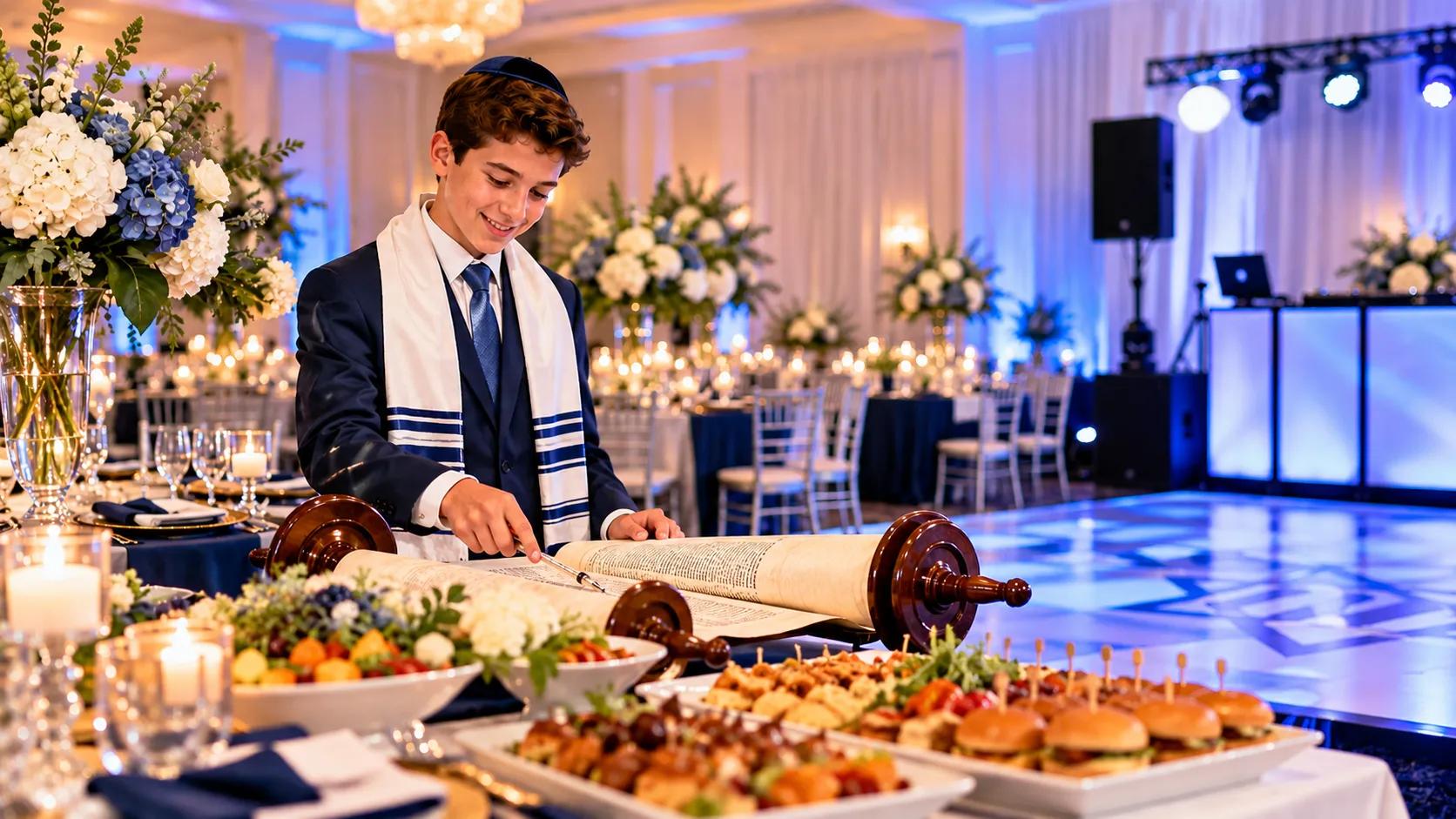
A bar mitzvah marks a Jewish boy’s coming of age, usually at thirteen, and the celebration that follows the service involves many decisions. Bar mitzvah parties range from a small lunch in a synagogue hall to a full evening event with a band and several hundred guests. This article explains the basics of choosing a venue, building a menu, and planning entertainment, along with a simple timeline for hosts.
Understanding the Event
A bar mitzvah is a religious milestone. The young person becomes responsible for observing Jewish commandments. The ceremony often takes place on a Shabbat morning, when the honoree may read from the Torah, lead prayers, or speak about the weekly portion.
Many families hold a celebration after the service. Its size and style depend on family tradition, community customs, and the guest list. Hosts often speak with a rabbi or cantor early, since the date and synagogue rules shape the schedule for the party.
Bat Mitzvah Traditions
A girl observes a bat mitzvah, typically at age twelve or thirteen depending on the community. Many customs are shared, and the planning steps are similar. Bat mitzvah parties follow the same structure of venue, food, and entertainment, though some families choose different ceremonies, themes, or readings.
Setting the Date and Guest List
The date comes first because the ceremony is tied to the Hebrew calendar and the synagogue schedule. Popular dates fill quickly, so many families reserve the synagogue and the reception space a year or more ahead.
The guest list affects every other choice. Hosts usually count relatives, friends, classmates, and community members, and many plan for separate groups of adult and young guests. A rough estimate. Let venues confirm that their rooms fit the group. Final numbers are required later, often a few weeks before the event.
Choosing a Venue
Types of Venues
Common choices include synagogue social halls, catering halls, hotels, restaurants, and private clubs. Some families prefer a home or a rented space for a smaller gathering. Each option has its own rules, services, and room layouts.
Factors to Compare
Capacity, location, and access should be reviewed first. Parking, accessible entrances, and distance from the synagogue matter to guests who travel on the same day. Observant families may need a venue close enough to walk, since some do not drive on the Sabbath. Ask whether the room has space for dining, dancing, a stage, and a separate area for younger guests.
Staffing is another point. Venues that offer a coordinator, servers, and a sound system reduce the number of vendors a host must manage. Ask about setup time, event length, and rules for decorations, music, and outside vendors.
Hosts who compare bar mitzvah parties across several venues can tour each space and request written details. Venues such as Windows on the Lake publish information about event spaces, capacity, and services, which hosts may review when they build a shortlist.
Planning the Menu
Kosher Requirements
Some families require kosher food, while others do not. Families who keep kosher need a caterer or venue with proper supervision, and the certifying agency should be confirmed in writing. Kosher rules separate meat and dairy, so menus are usually meat, dairy, or pareve, which means neither. Ask how the kitchen handles dishes, utensils, and desserts under these rules.
Service Styles and Courses
Options include plated meals, buffet stations, family style service, and cocktail receptions with small plates. A morning or afternoon event may use a lunch or brunch menu. An evening event often includes a cocktail hour, a main meal, and desserts. The meal commonly begins with a blessing over challah, led by a family member or guest.
Dietary Needs and Younger Guests
Hosts should collect information on allergies and on vegetarian, vegan, and gluten-free needs. Younger guests often prefer simple dishes and snacks, so a children’s menu or a separate station can keep the schedule moving. A tasting before the final decision lets the host review quality and portions.
Entertainment Basics
Music and Dancing
Dancing is central to many events. A DJ or live band typically leads the evening, and an experienced leader helps guests of all ages take part. Hosts can share a list of preferred songs, songs to avoid, and traditional pieces for the Hora, in which guests lift the honoree and family members on chairs.
Ceremonies During the Party
Many families include a candle lighting ceremony, in which the honoree recognizes relatives and friends. Others add speeches, a slideshow, or a presentation about a charitable project. Time for each moment should be set in advance so the schedule stays on track.
Activities for Guests
Photo booths, games, craft stations, and sports activities are common for younger guests, and some families set aside a separate room for teenagers. Bat mitzvah parties often include similar activities, with choices guided by the interests of the honoree.
Building a Planning Timeline
Most bar mitzvah parties require work across many months. A simple order keeps tasks organized:
Twelve to eighteen months before: confirm the ceremony date and reserve the venue.
Nine to twelve months before: select a caterer, entertainer, and photographer.
Six months before: finalize the theme, invitations, and decor.
Three months before: send invitations and schedule a tasting.
One month before: collect responses, confirm the guest count, and set the seating plan.
One week before: review final details with each vendor.
Conclusion
Planning a bar mitzvah involves religious, practical, and social details. Hosts who confirm the date early, set a clear guest count, and review venue, menu, and entertainment options in an organized way are better prepared to create bar mitzvah parties that fit the family, the community, and the honoree.